
Furniture Hardware
1820–30
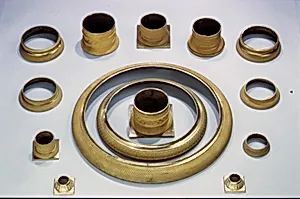
Medium
Gilt brass
Dimensions
Top: H. 11/16 in. (1.7 cm); Diam. 3/4 in. (1.9 cm) Base: 1 1/2 x 13 in. (3.8 x 33 cm)
Classification
Furniture hardware
Department
The American Wing
Museum
Metropolitan Museum of Art, New York, NY
Credit
Gift of Mrs. Edward Hunting Smith, 1968
Accession Number
Inst.68.8.9
Rights
Public Domain
Art Historical Context
This gilt brass furniture hardware, created by Henry Kellam Hancock between 1820 and 1830, represents the refined decorative arts of early nineteenth-century America. The set includes a small circular top element and an elongated base, designed as functional yet ornamental fittings—likely drawer pulls or mounts—for wooden case furniture. Its warm, golden finish was achieved through gilding, a technique that gave brass the luxurious appearance of gold at a more accessible cost. In the decades following the American Revolution, such hardware reflected growing national prosperity and an appreciation for elegant domestic interiors. Artisans like Hancock supplied components that elevated everyday furnishings, blending practicality with neoclassical restraint typical of the Federal period. These pieces would have caught the light in parlors and dining rooms, adding subtle sparkle to mahogany or cherry chests and tables. Now part of the Metropolitan Museum’s American Wing, this hardware was a generous gift in 1968. It offers today’s visitors a tangible connection to the skilled metalworkers who supported the nation’s furniture trade, reminding us that beauty often resided in the smallest details of the home.
About the Artist
Henry Kellam Hancock · 1816–1851
Henry Kellam Hancock (1788–1854) was a prominent American cabinetmaker based in Boston, Massachusetts, where he contributed significantly to the city's early nineteenth-century furniture trade. Son of Captain Belcher Hancock and Ann "Nancy" Susan Ackers, he entered the profession as a chairmaker around 1816 and transitioned to cabinetmaking by 1826, maintaining workshops on Orange Street from abou...