
Furniture Hardware
1820–30
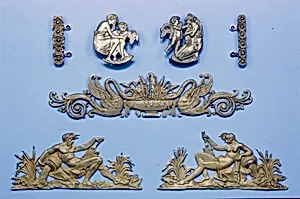
Medium
Gilt brass
Dimensions
2 3/8 x 7/8 in. (6 x 2.2 cm)
Classification
Furniture hardware
Department
The American Wing
Museum
Metropolitan Museum of Art, New York, NY
Credit
Gift of Mrs. Edward Hunting Smith, 1968
Accession Number
Inst.68.8.82
Rights
Public Domain
Art Historical Context
This exquisite piece of furniture hardware, crafted by Henry Kellam Hancock between 1820 and 1830, exemplifies the refined decorative arts of early nineteenth-century America. Measuring just over two inches in length, this gilt brass fitting—likely a drawer pull or escutcheon—was designed to adorn fine furniture in prosperous households. The use of gilt brass, with its warm golden sheen, allowed artisans to achieve an elegant, luxurious appearance at a more accessible cost than solid gold, reflecting the growing middle-class aspirations of the young republic. Hancock’s work belongs to the American Wing’s collection of decorative metalwork, highlighting how even small functional objects contributed to the overall aesthetic of neoclassical and Empire-style furnishings popular during this era. Such hardware often featured delicate engraving or casting techniques that caught the light beautifully, transforming everyday cabinets and chests into statements of taste and status. Gifted to the Metropolitan Museum by Mrs. Edward Hunting Smith in 1968, this modest yet meticulously made item offers visitors a glimpse into the skilled craftsmanship that supported America’s emerging furniture industry.
About the Artist
Henry Kellam Hancock · 1816–1851
Henry Kellam Hancock (1788–1854) was a prominent American cabinetmaker based in Boston, Massachusetts, where he contributed significantly to the city's early nineteenth-century furniture trade. Son of Captain Belcher Hancock and Ann "Nancy" Susan Ackers, he entered the profession as a chairmaker around 1816 and transitioned to cabinetmaking by 1826, maintaining workshops on Orange Street from abou...