
Furniture Hardware
1820–30
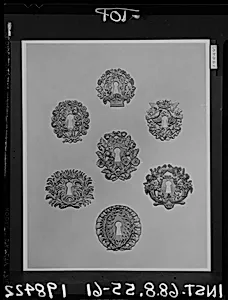
Medium
Gilt brass
Dimensions
2 1/2 x 2 3/16 in. (6.4 x 5.6 cm)
Classification
Furniture hardware
Department
The American Wing
Museum
Metropolitan Museum of Art, New York, NY
Credit
Gift of Mrs. Edward Hunting Smith, 1968
Accession Number
Inst.68.8.60
Rights
Public Domain
Art Historical Context
This exquisite piece of furniture hardware, crafted by Henryam Hancock between 1820 and 1830, exemplifies the refined decorative arts of early nineteenth-century America. Measuring just over two inches, this gilt brass element—likely a drawer pull or escutcheon—would have adorned elegant case furniture in prosperous households. The warm glow of the gilded surface highlights the meticulous metalworking techniques of the period, where brass was cast, chased, and gilded to mimic the luxury of more precious materials. Hancock’s work reflects the growing sophistication of American craftsmanship during the young republic’s expansion. As part of the Metropolitan Museum’s American Wing, this object speaks to a time when even functional hardware became an opportunity for artistic expression, blending utility with neoclassical elegance popular in Federal-era interiors. Its presence in fine homes underscored social status and an appreciation for European-inspired design adapted to American tastes. Donated to the museum in 1968 by Mrs. Edward Hunting Smith, the piece invites us to consider how small details shaped daily life and aesthetic sensibilities two centuries ago. Such surviving hardware offers a tangible connection to the artisans and homeowners who valued beauty in the most ordinary objects.
About the Artist
Henry Kellam Hancock · 1816–1851
Henry Kellam Hancock (1788–1854) was a prominent American cabinetmaker based in Boston, Massachusetts, where he contributed significantly to the city's early nineteenth-century furniture trade. Son of Captain Belcher Hancock and Ann "Nancy" Susan Ackers, he entered the profession as a chairmaker around 1816 and transitioned to cabinetmaking by 1826, maintaining workshops on Orange Street from abou...