
Furniture Hardware
1820–30
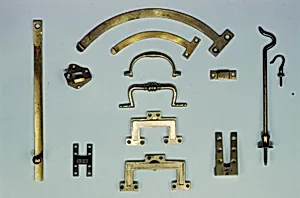
Medium
Gilt brass
Dimensions
H. 3 1/4 in. (8.3 cm)
Classification
Furniture hardware
Department
The American Wing
Museum
Metropolitan Museum of Art, New York, NY
Credit
Gift of Mrs. Edward Hunting Smith, 1968
Accession Number
Inst.68.8.30
Rights
Public Domain
Art Historical Context
This elegant piece of furniture hardware, created by Henry Kellam Hancock 1820 and 1830, showcases the refined craftsmanship of early nineteenth-century American decorative arts. Cast in gilt brass and standing just 3¼ inches tall, these fittings—likely drawer pulls or escutcheons—were designed to bring both utility and subtle ornament to case furniture. Their warm, golden surface would have caught the light in well-appointed parlors, elevating everyday storage pieces into objects of quiet sophistication. During this period, American artisans like Hancock drew on neoclassical influences while adapting European techniques to local tastes and materials. Gilt brass offered an affordable yet durable alternative to solid gold or silver mounts, allowing a broader range of households to enjoy fashionable details. The American Wing’s collection highlights how such small-scale metalwork contributed to the broader story of domestic life and industrial skill in the young republic. Generously gifted to the Metropolitan Museum by Mrs. Edward Hunting Smith in 1968, the hardware invites visitors to look closely at the artistry embedded in functional objects. It reminds us that beauty in the early American home often resided in thoughtful details rather than grand statements.
About the Artist
Henry Kellam Hancock · 1816–1851
Henry Kellam Hancock (1788–1854) was a prominent American cabinetmaker based in Boston, Massachusetts, where he contributed significantly to the city's early nineteenth-century furniture trade. Son of Captain Belcher Hancock and Ann "Nancy" Susan Ackers, he entered the profession as a chairmaker around 1816 and transitioned to cabinetmaking by 1826, maintaining workshops on Orange Street from abou...