
Furniture Hardware
1820–30
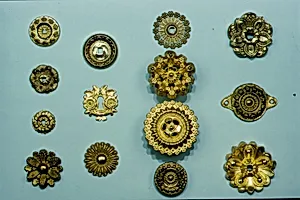
Medium
Gilt brass
Dimensions
Diam. 1 13/16 in. (4.6 cm)
Classification
Furniture hardware
Department
The American Wing
Museum
Metropolitan Museum of Art, New York, NY
Credit
Gift of Mrs. Edward Hunting Smith, 1968
Accession Number
Inst.68.8.52
Rights
Public Domain
Art Historical Context
This gilt brass furniture hardware, crafted by Henry Kellam Hancock between 1820 and 1830, represents the refined decorative arts of early nineteenth-century America. Likely a drawer pull or escutcheon, its modest scale—just 1 13/16 inches across—belies the careful attention given to even the smallest details in period furnishings. Housed in the Metropolitan Museum’s American Wing, the piece reflects a time when American makers were developing distinct styles while drawing on European traditions of elegance and utility. Gilt brass was especially valued for its warm, golden luster and resistance to tarnish, achieved by applying a thin layer of gold to the brass base. Such hardware elevated everyday furniture like chests of drawers or desks, turning functional objects into statements of taste and prosperity in growing American households. Hancock’s work captures this blend of craftsmanship and artistry during the nation’s formative decades. Donated to the museum in 1968 by Mrs. Edward Hunting Smith, this small yet significant object offers visitors a glimpse into the material world of the 1820s and 1830s, where metalwork played a quiet but essential role in domestic beauty.
About the Artist
Henry Kellam Hancock · 1816–1851
Henry Kellam Hancock (1788–1854) was a prominent American cabinetmaker based in Boston, Massachusetts, where he contributed significantly to the city's early nineteenth-century furniture trade. Son of Captain Belcher Hancock and Ann "Nancy" Susan Ackers, he entered the profession as a chairmaker around 1816 and transitioned to cabinetmaking by 1826, maintaining workshops on Orange Street from abou...