
Galatea (?)
Pinturicchio, ca. 1509
About this artwork
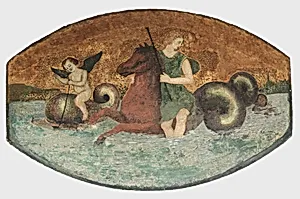
Behold *Galatea (?) *, a captivating fresco by the Umbrian Renaissance master Pinturicchio, dating to around 1509. Originally painted on a wall, this work was meticulously transferred to canvas and mounted on wood panels—a rare and labor-intensive technique that preserved its vibrant colors and intricate details for modern viewers. Measuring 24⅞ × 39⅜ inches, it now graces the Metropolitan Museum of Art European Sculpture and Decorative department, acquired through the Rogers Fund in 4. Pinturic, renowned for his luminous fresco cycles in Vatican palaces and Umbrian churches, infused this piece with the elegance of High Renaissance decorative art. The tentative title evokes the myth of Galatea, the sea nymph often depicted amid swirling figures, accompanied by Cupid's playful arrows and dynamic horses—symbols of love, desire, and mythological splendor. These motifs, tagged with women, Cupid, and horses, highlight Pinturicchio's skill in blending narrative grace with ornamental beauty, characteristic of Italian Renaissance frescoes that adorned elite spaces. This artwork exemplifies Umbria's contribution to Renaissance painting: vivid storytelling through delicate modeling, rich blues, and golds that once animated palatial interiors. A testament to enduring classical themes, it invites visitors to ponder love's triumphs in an age of artistic revival.