
Gaming pieces
Unknown Artist
ca. 1635–1458 B.C.
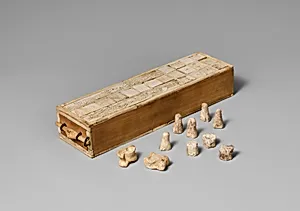
Medium
Ivory
Dimensions
cones (average): 2.6 × 1.5 cm (1 × 9/16 in.); spools (average): 1.6 × 1.7 cm (5/8 × 11/16 in.); knuckle bones : 1.8 × 2.8 cm (11/16 × 1 1/8 in.)
Classification
Game pieces (8), knucklebones (2); TW-STOP7
Period
Second Intermediate Period–Early New Kingdom
Department
Egyptian Art
Museum
Metropolitan Museum of Art, New York, NY
Credit
Rogers Fund, 1916
Accession Number
16.10.475b–k
Rights
Public Domain
Tags
Art Historical Context
These delicate ivory gaming pieces, dating to around 1635–1458 B.C., hail from Egypt's Second Intermediate Period through the Early New Kingdom (Dynasties 17–18). Crafted in shapes like cones, spools, and knuckle—measuring just a few centimeters each—they were essential tools for ancient board games, a beloved pastime among Egyptians of all social classes. Games like Senet, often depicted in tombs, symbolized life's journey and even passage to the afterlife, blending recreation with profound cultural beliefs. Carved from elephant ivory, a prized material symbolizing luxury and skill, these pieces showcase the era's masterful craftsmanship. Despite the turbulent times of Hyksos rule and the rise of native pharaohs like Ahmose I, artisans produced these precisely turned objects, highlighting continuity in Egyptian artistry amid political upheaval. Their small scale and smooth finishes reflect everyday functionality fused with aesthetic refinement. Acquired through the Rogers Fund in 1916, these artifacts now reside in the Metropolitan Museum of Art's Egyptian Art collection, offering a tangible glimpse into leisure and ritual in one of history's most enduring civilizations. Visitors can imagine nobles and commoners alike tossing these pieces across game boards under the Nile's sun.