
Ganesha
Unknown Artist
ca. 1700–1750
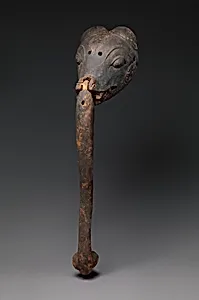
Medium
Wood with cloth and polychrome
Dimensions
H. (on stand) 34 1/4 in. (87 cm); W. 8 1/4 in. (21 cm); D. 13 1/2 in. (34.3 cm)
Classification
Sculpture
Culture
Southern India, Tamil Nadu, probably Thanjavur district
Department
Asian Art
Museum
Metropolitan Museum of Art, New York, NY
Credit
Purchase, The Vincent Astor Foundation Gift and The Miriam and Ira D. Wallach Foundation Fund, 2015
Accession Number
2015.255.5a–c
Rights
Public Domain
Tags
Art Historical Context
This vibrant wooden sculpture of Ganesha the beloved elephant-headed Hindu deity and remover of obstacles, hails from southern India, likely the Thanjavur district of Nadu, around 1700–1750. Standing over 34 inches tall on its custom base, the figure captures Ganesha in a dynamic seated pose, embodying prosperity and wisdom. Revered as the lord of beginnings and patron of arts and intellect, such sculptures were central to temple rituals and festivals, invoking divine blessings for devotees. Crafted during the Nayak or early Maratha period in Thanjavur—a renowned hub of South Indian artistry—the piece exemplifies the region's mastery of wood carving. Artists adorned the lightweight teak or similar wood with polychrome paints in vivid reds, golds, and blues, enhancing its lifelike expression, while cloth elements simulate flowing garments or ritual drapery. This technique allowed for portable processional icons, easily carried in vibrant street parades. Today, at the Metropolitan Museum of Art, this acquisition highlights the enduring cultural legacy of Tamil Nadu's devotional art, blending spirituality with exquisite craftsmanship for both worship and aesthetic wonder.