
Gaspard de Daillon du Lude (ca. 1602–1676)
1628
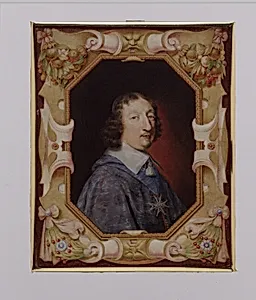
Medium
Vellum stretched over copper
Dimensions
Octagonal, 6 1/8 x 4 3/4 in. (157 x 122 mm)
Classification
Miniatures
Department
European Paintings
Museum
Metropolitan Museum of Art, New York, NY
Credit
Rogers Fund, 1959
Accession Number
59.72.1
Rights
Public Domain
Tags
Art Historical Context
Step into the intimate world of 17th-century French portraiture with Jacques Saillant's *Gaspard de Da du Lude* (ca. 1602–1676), a delicate miniature painted in 1628. This octagonal gem, measuring just 6 1/8 x 4 3/4 inches, captures the nobleman—likely a prominent figure in Louis XIII's court—in exquisite detail. Saillant, a skilled French miniaturist, exemplifies the's demand for highly personal likenesses, often worn as jewelry or kept in private collections. The innovative medium of vellum stretched over copper underscores its artistic ingenuity. Vellum, a fine parchment made from animal skin, allowed for luminous transparency and precise brushwork, while the copper support provided stability for such a small scale. This technique highlights the technical virtuosity of miniature painting, a specialized art form bridging painting and craft, popular among Europe's aristocracy for conveying status and affection. Housed in the Metropolitan Museum of Art's European Paintings department (acquired via the Rogers Fund in 1959), this work reflects the early Baroque emphasis on realism and elegance. Portrait miniatures like this one were cultural treasures, fostering personal connections in an age of political intrigue and courtly splendor—imagine it pinned to a lapel, a silent testament to identity and legacy.
About the Artist
Jacques Saillant · 1620–1638
**Jacques Saillant** (active by 1620–died in or after 1638) was a French portrait miniaturist born in Avignon who joined an Augustinian religious order, adopting the name Saliano (or Salianus Augustinianus). Little is known of his early life or formal training, which remains undocumented in surviving sources; however, his presence in Rome and Florence from 1620 to 1633 suggests exposure to the vib...