
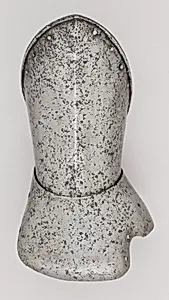
Gauntlet for the Right Hand
Unknown Artist
ca. 1450–60
Medium
Steel
Dimensions
L. 9 3/4 in. (24.8 cm); W. 5 3/8 in. (13.7 cm); D. 5 in. (12.7 cm); Wt. 12.1 oz. (343 g)
Classification
Armor for Man
Culture
Italian, probably Milan
Department
Arms and Armor
Museum
Metropolitan Museum of Art, New York, NY
Credit
Bashford Dean Memorial Collection, Bequest of Bashford Dean, 1928
Accession Number
29.150.7j
Rights
Public Domain
Art Historical Context
This exquisite steel gauntlet for the right hand, crafted around 1450–60 in Italy—likely Milan—represents the pinnacle of Renaissance armor-making. Measuring just 9¾ inches long and weighing a mere 12.1 ounces, it was designed for a man's hand, offering vital protection during combat while preserving dexterity for wielding swords or lances. Milanese workshops were renowned for such innovations, producing armor that balanced strength, mobility, and elegance for knights and soldiers amid the era's frequent wars, like those of the Italian city-states. The gauntlet's construction highlights masterful metallurgical techniques: hammered steel plates, precisely riveted and articulated at the fingers and wrist, allowed fluid movement without sacrificing defense against slashes and thrusts. This reflects the transition from heavier medieval plate to lighter, more refined designs suited to the evolving tactics of 15th-century Europe. Now part of the Metropolitan Museum of Art's Bashford Dean Memorial Collection (bequeathed in 1928), this artifact invites us to ponder the human ingenuity behind the clash of arms—where beauty met brutality on the battlefield.