
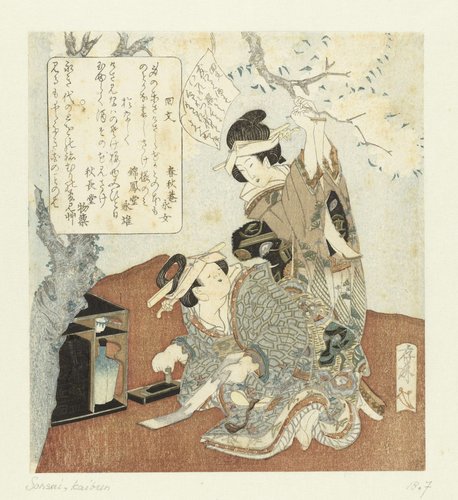
Gedichten ophangen
1832
Medium
nishikie, with metallic pigments and blindprinting
Dimensions
205; 182
Rights
Public Domain
About this artwork
height 205 mm x width 182 mm
Art Historical Context
**Gedichten ophangen** (*Hanging Poems*), created by Japanese artist Sonsai Kô in 1832, is a delicate nishikie woodblock measuring just 205 mm high by 182 mm wide. This format was typical of ukiyo-e prints from Japan's Edo period (1603–1868), a time when such artworks captured everyday life, poetry, and seasonal traditions with vivid storytelling. Sonsai Kôichi, lesser-known today, contributed to the rich tradition of printmakers who elevated popular art into collector's treasures. The medium shines through its advanced techniques: nishikie, or "brocade pictures," involved layering dozens of woodblocks for brilliant colors, while metallic pigments added luxurious gold or silver gleams, evoking opulence. Blindprinting (karazuri) introduced subtle embossed textures, enhancing depth without ink— a hallmark of high-end surimono prints often commissioned for poetic exchanges or New Year's greetings. These innovations made prints like this both visually stunning and tactile, bridging art and craftsmanship. Culturally, the title suggests a scene of suspending poems, reflecting Japan's deep poetic heritage, where haiku and waka adorned homes during festivals. As a snapshot of 19th-century urban life, it invites us to appreciate how ukiyo-e democratized beauty, influencing global art from Impressionism onward. A gem for any collection!