
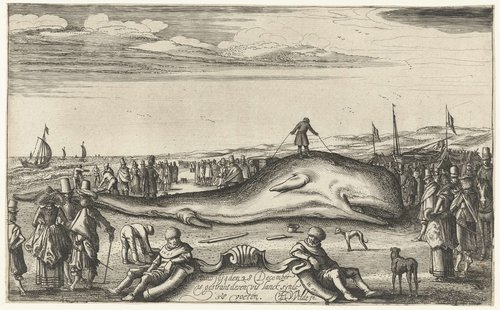
Gestrande potvis op het strand te Noordwijk, 1614
Medium
etching
Dimensions
241; 149
Rights
Public Domain
About this artwork
verzamelaarsmerk, verso linksonder, gestempeld: Lugt 240
Art Historical Context
Esaias van de Velde etching *Gestrande potvis het strand te Noordwijk 1614* captures a dramatic moment from Dutch history: the stranding of a massive sperm on the beach at Noord in 1614. Created in 1645, this intimate (149 × 241 mm) reflects Dutch Golden Age fascination with natural wonders and maritime life. Van de Velde, a pioneering landscape artist, masterfully rendered the scene with intricate lines, evoking the awe of spectators gathered around the behemoth carcass amid windswept dunes and a moody sky. As an early innovator in tonal landscapes, van de Velde used etching—a technique involving acid-bitten metal plates—to achieve fine detail and atmospheric depth, bridging painting and printmaking. Beached whales were sensational events in 17th-century Netherlands, often depicted as omens or spectacles that drew crowds, symbolizing humanity's encounter with the unknown. This work exemplifies how artists documented real-life marvels, blending observation with subtle narrative tension. Verso, a collector's mark (Lugt 240) stamps its provenance, hinting at its valued place in connoisseur collections. A gem for visitors, it invites reflection on nature's power through van de Velde's precise, evocative craft.