
Gevelanker
Unknown Artist
c. 1600 - c. 1699
Medium
forging
Dimensions
85; 35
Rights
Public Domain
About this artwork
height 85 cm x width 35 cm
Art Historical Context
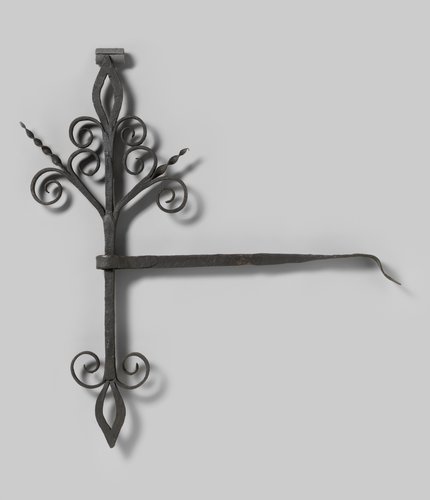
**Gevelanker (Gable Anchor), c. 1600–1699** This striking *Gevelanker*, or gable anchor, hails from the Dutch Golden Age, a period of remarkable prosperity and architectural innovation in the Netherlands (c. 1600–1699). Crafted by an unknown artisan, this forged iron piece measures approximately 85 cm high by 35 cm wide. Gable anchors like this one were essential features on the narrow canal houses of cities like Amsterdam, serving a dual purpose: they secured the heavy roof beams to the facade, preventing structural collapse, while doubling as ornate decorations that proclaimed the homeowner's trade or status—often shaped as anchors, ships, or initials. The medium of forging highlights the blacksmith's masterful skill, involving heating iron to a malleable state and hammering it into intricate forms by hand. This labor-intensive technique produced durable yet elegant objects that weathered centuries of harsh weather, embodying the practical artistry of 17th-century Dutch craftsmanship. Such anchors were not mere hardware but symbols of civic pride, adorning gables in a riot of wrought-iron flourishes during an era when the Netherlands dominated global trade. Today, this anonymous *Gevelanker* offers a tangible glimpse into everyday urban life, reminding us how functional objects could elevate architecture into art. Its survival speaks to the enduring legacy of Dutch ingenuity.