
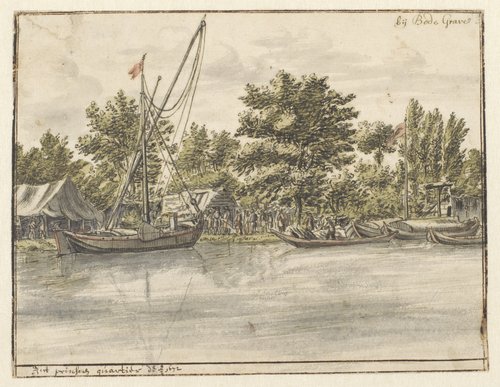
Gezicht op het kwartier van prins Willem III te Bodegraven
1672-09-02
Medium
pen and brown ink, with grey wash; ? later additions in watercolour; framing line in brown ink
Dimensions
196; 150
Rights
Public Domain
About this artwork
pen en bruine inkt, met penseel en grijze inkt; ? later additions met penseel en waterverf; kaderlijnen in bruine inkt
Art Historical Context
This delicate drawing by Barend Klotz, dated September 2, 1672, offers a rare eyewitness glimpse of Prince William III’s military encampment at Bodegraven during the dramatic events of the Dutch “Disaster Year.” Created with pen and brown ink and finished in grey wash, the work records the temporary quarters of the future King William III at a critical moment when French forces threatened the young Dutch Republic. Its modest size—just 150 by 196 millimetres—suggests it was made on the spot, perhaps as part of an official or personal record of the campaign. Klotz employs the economical Dutch draughtsman’s technique of the period: crisp pen lines define tents, figures, and landscape, while the grey wash adds depth and atmosphere without overwhelming the composition. Possible later watercolour touches hint at the drawing’s continued life as a valued historical document long after the events it depicts. Today the sheet serves as both an artistic survival and a vivid historical witness, preserving the fleeting appearance of a princely headquarters at a turning point in European history. Its restrained technique and precise date make it especially valuable for understanding how 17th-century artists combined observation with reportage.