
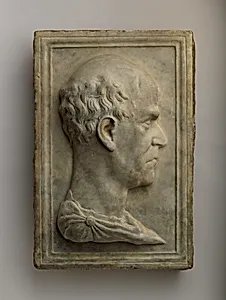
Giovanni Gioviano Pontano (1426–1503)
Medium
Marble
Dimensions
Overall (wt. confirmed): H. 19 7/8 x W. 13 1/8 x D. 4 1/2 in., Wt. 73lb. (50.5 x 33.3 x 11.4 cm, 33.1126kg)
Classification
Sculpture
Culture
Italian, Naples
Department
European Sculpture and Decorative Arts
Museum
Metropolitan Museum of Art, New York, NY
Credit
Purchase, Gift of J. Pierpont Morgan, by exchange, 1991
Accession Number
1991.21
Rights
Public Domain
Tags
Art Historical Context
This exquisite marble bust captures Giovanni Gioviano Pontano1426–1503), a towering figure of the Italian Renaissance. A poet, philosopher, and statesman Pontano served as prime minister to the Aragonese kings of Naples, blending classical learning with political influence. Created around 1490 by Adriano Fiorentino (Adriano di Giovanni' Maestri), a Neapolitan sculptor renowned for his medals and portraits, the work exemplifies the era's revival of ancient Roman portraiture. Pontano's dignified profile gaze evokes imperial busts from antiquity, underscoring the humanist ideal of linking modern intellect to classical heritage. Carved from fine marble, the sculpture measures about 20 inches high and weighs 73 pounds, showcasing Fiorentino's mastery of subtle modeling and polished surfaces. The profile view—emphasized by the work's classical pose—highlights Pontano's noble features, from his flowing beard to thoughtful expression, techniques that convey both realism and timeless gravitas. Produced in Naples' vibrant artistic hub under Aragonese patronage, it reflects the city's role as a bridge between Italian Renaissance centers like Florence and the classical past. Today, housed in the Metropolitan Museum of Art's European Sculpture and Decorative Arts department, this bust invites visitors to ponder the Renaissance fusion of scholarship and power. A testament to Fiorentino's skill, it immortalizes Pontano's legacy as a key architect of early modern thought.