
Girdle Clasp
Unknown Artist
18th–19th century
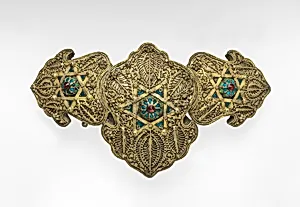
Medium
Silver; gilded and filigreed with enamel and stones
Classification
Jewelry
Department
Islamic Art
Museum
Metropolitan Museum of Art, New York, NY
Credit
Edward C. Moore Collection, Bequest of Edward C. Moore, 1891
Accession Number
91.1.1099
Rights
Public Domain
Art Historical Context
Nestled in the Metropolitan Museum of Art's Islamic collection, this exquisite *Girdle Clasp* from the 18th–19th century showcases the opulent craftsmanship of an unknown artist. Crafted from, it gleams with gilding and intricate filigree—delicate wires twisted into floral motifs—enhanced by vibrant enamel and sparkling stones. Part of the Edward C. Collection (bequeathed in 1891), it once secured a girdle or belt, blending everyday utility with luxurious adornment. The clasp exemplifies Islamic jewelry traditions, where filigree techniques demanded extraordinary skill, often passed down through generations in workshops across the Ottoman Empire or Persia. Gilding added a golden luster, while enamel provided colorful accents, and stones like turquoise or garnets symbolized prosperity. Such pieces were status symbols for women, worn at waistlines to accentuate elegant robes during social or ceremonial occasions. This artifact invites us to marvel at the fusion of function and fine art in Islamic culture, where geometric and floral patterns evoked paradise gardens without figurative forms. A testament to enduring artistry, it whispers stories of a vibrant era long past.