
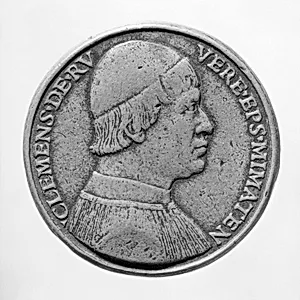
Giuliano and Clemente della Rovere
ca. 1494
Medium
Bronze, cast
Dimensions
Diameter: 61.3 mm
Classification
Medals and Plaquettes
Culture
Italian, Rome
Department
European Sculpture and Decorative Arts
Museum
Metropolitan Museum of Art, New York, NY
Credit
Ann and George Blumenthal Fund, 1950
Accession Number
50.58.16
Rights
Public Domain
Tags
Art Historical Context
Behold the exquisite bronze medal *Giuliano and Clemente Rovere* (ca. 1494), crafted the skilled Italian artist Giovanni Filangieri Candida Rome. Measuring just 61.3 mm in diameter, this cast bronze plaquette captures intimate profile portraits of two brothers from the prominent della Rovere family—Giiano, who would later ascend as Pope Julius II, and Clemente, a bishop. Such medals were prized Renaissance collectibles, blending portraiture with the classical revival of ancient Roman coinage. Filangieri Candida's work exemplifies the early Renaissance medal tradition, where artists like him emulated Greco-Roman profiles to honor patrons with personal, reversible casts. The obverse likely features the brothers' dignified heads, symbolizing their ecclesiastical rising stars amid Rome's papal politics. Giuliano's future papacy would commission masterpieces by Michelangelo, linking this small artwork to grand High Renaissance achievements. Housed in the Metropolitan Museum of Art's European Sculpture and Decorative Arts collection, thanks to the Ann and George Blumenthal Fund, this piece offers a tangible glimpse into 15th-century Italian elite culture—where bronze medals served as diplomatic gifts, family mementos, and subtle power displays. A testament to precision casting and humanistic portraiture, it invites us to ponder the ambitions etched in miniature metal.