
Glass amphoriskos (perfume bottle)
Unknown Artist
late 6th–5th century BCE
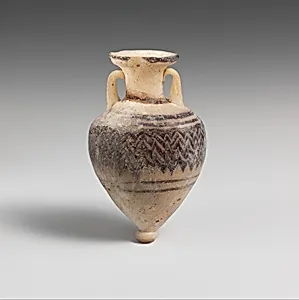
Medium
Glass
Dimensions
Diam.: 2 7/8 in. (7.2 cm)
Classification
Glass
Culture & Period
Greek, Eastern Mediterranean · Classical
Department
Greek and Roman Art
Museum
Metropolitan Museum of Art, New York, NY
Credit
Gift of J. Pierpont Morgan, 1917
Accession Number
17.194.790
Rights
Public Domain
Art Historical Context
This delicate glass amphoriskos a small perfume bottle from the late 6th to 5th century BCE offers a glimpse into the refined world of Classical Greek culture in the Eastern Mediterranean. Measuring just 2 7/8 inches (7.2 cm) in, its compact, elegant form was designed to hold precious oils or fragrances—essentials for personal grooming, rituals, and social gatherings like symposia. Such vessels highlight the Greeks' appreciation for luxury and beauty in everyday life, the Archaic and Classical periods when art and craftsmanship flourished. Crafted from glass, a medium that was both technically challenging and highly valued in antiquity, this amphoriskos exemplifies early innovations in glassworking. Artisans in the Eastern Mediterranean, possibly from workshops in Rhodes or nearby regions, shaped these bottles using core-forming techniques, layering trails of molten glass around a removable core to create translucent, jewel-like effects. Though fragile, glass's shine mimicked more expensive materials like rock crystal, making it a status symbol for the elite. Today, this treasure resides in the Metropolitan Museum of Art's Greek and Roman Art Department, a generous gift from J. Pierpont Morgan in 1917. It invites us to imagine the scented whispers of ancient hands, connecting modern visitors to the sensory sophistication of the Classical world.