
Glass bead
Unknown Artist
ca. 3rd–5th century CE
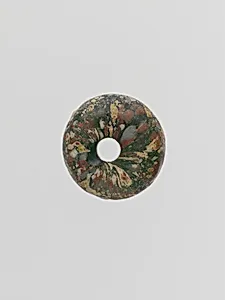
Medium
Glass
Dimensions
Diam.: 1 7/16 in. (3.6 cm)
Classification
Glass
Culture & Period
Roman · Late Imperial
Department
Greek and Roman Art
Museum
Metropolitan Museum of Art, New York, NY
Credit
Gift of J. Pierpont Morgan, 1917
Accession Number
17.194.405
Rights
Public Domain
Art Historical Context
This delicate glass bead, dating to around the 3rd–5th century CE, hails from the Late Imperial Roman period—a time when the vast empire stretched across Europe, North Africa, and the Near East, blending cultures and fostering remarkable craftsmanship. Measuring just 1 7/16 inches (3.6 cm) in diameter, this small sphere exemplifies the everyday artistry of Roman glassmakers, who transformed humble silica into objects of beauty and utility. Likely part of a necklace, bracelet, or amulet, it would have adorned someone from a humble trader to a wealthy patron, reflecting the democratization of luxury goods in late antiquity. Roman glass production was a technological marvel, with beads like this one formed through techniques such as winding molten glass around a metal rod or using molds for mass creation. These methods allowed for vibrant colors and intricate designs, making glass an accessible alternative to precious gems. Culturally, such beads held practical and symbolic value: they served as trade commodities along the Silk Road and Mediterranean routes, and some were believed to offer protection against the evil eye or illness. Today, this bead graces the Metropolitan Museum of Art's Greek and Roman Art department, a generous gift from J. Pierpont Morgan in 1917. It invites us to ponder the lives of ordinary Romans, whose simple adornments whisper stories of resilience amid imperial decline.