
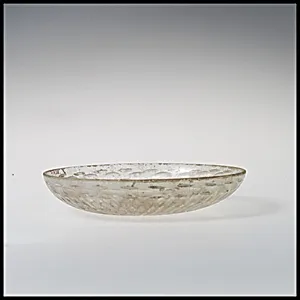
Glass bowl
Unknown Artist
3rd–4th century CE
Medium
Glass
Dimensions
H. 1 in. (2.5 cm) diameter 4 1/2 in. (11.4 cm)
Classification
Glass
Culture & Period
Roman · Late Imperial
Department
Greek and Roman Art
Museum
Metropolitan Museum of Art, New York, NY
Credit
Gift of Henry G. Marquand, 1881
Accession Number
81.10.46
Rights
Public Domain
Art Historical Context
This exquisite glass bowl, crafted by an unknown Roman artisan in the Late Imperial period (3rd–4th century CE), offers a glimpse into the refined domestic life of ancient Rome. Measuring just 1 inch (2.5 cm) in height and 4½ inches (11.4 cm) in diameter, shallow, open form suggests it served practical purposes—perhaps holding cosmetics, spices, or small offerings at a banquet. Donated to the Metropolitan Museum of Art 1881 by Henry G. Marquand, it resides in the Greek and Roman Art department, testament to 19th-century passion for classical antiquities. Roman glassmaking reached remarkable heights during this era, with techniques like free-blowing enabling the production of thin, translucent vessels that were both affordable and elegant. Unlike earlier cast glass, these blown pieces were lightweight and versatile, symbolizing the empire's technological prowess and widespread trade networks. Transparent or lightly colored glass like this was prized for its clarity, mimicking luxury materials such as rock crystal while making beauty accessible to the middle classes. Though simple in design, the bowl embodies the cultural shift of Late Imperial Rome, a time of political upheaval and artistic continuity, where everyday objects reflected enduring aesthetic values. Visitors, imagine it gleaming under oil lamp light in a bustling villa— a fragile survivor of antiquity's grandeur.