
Glass Fragment
Unknown Artist
12th–14th century
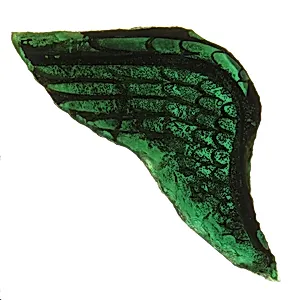
Medium
Pot-metal glass, vitreous paint
Dimensions
Overall: 1 1/2 x 3 3/4 in (3.8 x 9.5 cm)
Classification
Glass-Stained
Culture
French
Department
Medieval Art
Museum
Metropolitan Museum of Art, New York, NY
Credit
Gift of Ella Brummer, in memory of her husband, Ernest Brummer, 1977
Accession Number
1977.346.14
Rights
Public Domain
Art Historical Context
This delicate glass fragment, dating from the 12th to 14th century, h from medieval France and offers a glimpse the luminous world of Gothic stained glass. Likely a surviving piece from a larger church window, it exemplifies the era's masterful use of colored glass to illuminate sacred spaces. Produced during the High and Late Middle Ages, when cathedrals like Chartres and Notre-Dame rose across Europe, such fragments captured biblical narratives or symbolic motifs, transforming sunlight into vibrant storytelling jewels for worshippers. Crafted from pot-metal glass—where metallic oxides were mixed into the molten glass for deep, translucent colors—the fragment was enhanced with vitreous paint. This lead-based enamel, fired onto the surface, allowed artists to add fine details like facial features, drapery folds, or inscriptions without compromising the glass's glow. At just 1 1/2 x 3 3/4 inches, its modest size belies the technical sophistication required, as pieces were cut, painted, and leaded into vast narrative panels that educated the illiterate masses. Generously gifted to the Metropolitan Museum of Art in 1977 by Ella Brummer in memory of her husband, Ernest, this artifact underscores the enduring fragility and spiritual power of medieval glasswork. It invites us to imagine the divine light filtering through ancestral sanctuaries, a testament to French artisans' alchemy of color, faith, and craftsmanship.