
Glass Fragment
Unknown Artist
12th–14th century
Medium
Pot-metal glass, vitreous paint
Dimensions
Overall: 4 1/2 x 13/16 in. (11.5 x 2 cm)
Classification
Glass-Stained
Culture
French
Department
Medieval Art
Museum
Metropolitan Museum of Art, New York, NY
Credit
Gift of Ella Brummer, in memory of her husband, Ernest Brummer, 1977
Accession Number
1977.346.22
Rights
Public Domain
Art Historical Context
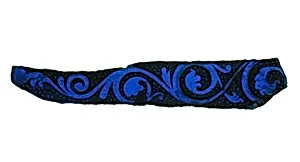
This delicate glass fragment, dating from the 12th to 14th century, offers a glimpse into the radiant world of medieval French stained glass. Crafted in the Medieval Art tradition, it hails from France during the Gothic era, when vast cathedral windows transformed sunlight into storytelling spectacles of biblical scenes, saints, and virtues. Though only a small piece measuring 4½ x 13/16 inches (11.5 x 2 cm), it survives as a testament to the artistry that once illuminated sacred spaces like Chartres or Notre-Dame. The fragment's medium—pot-metal glass combined with vitreous paint—highlights innovative techniques of the time. Pot-metal glass was colored throughout by mixing metallic oxides during melting, creating vibrant, jewel-like tones that endure without fading. Vitreous paint, a ground glass mixed with pigments and fired onto the surface, added fine details like facial features or drapery lines, allowing artists to achieve intricate designs on irregular shapes. Such methods demanded skilled labor in monastic workshops or urban glass houses. Generously gifted to the Metropolitan Museum of Art in 1977 by Ella Brummer in memory of her husband, Ernest, this fragment invites us to ponder the fragility of medieval treasures—most windows shattered over centuries—while celebrating their enduring glow and spiritual power.