
Glass Fragment
Unknown Artist
12th–14th century
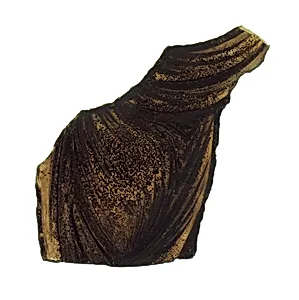
Medium
Pot-metal glass, vitreous paint
Dimensions
Overall: 2 1/2 x 4 in (6.4 x 10.2 cm)
Classification
Glass-Stained
Culture
French
Department
Medieval Art
Museum
Metropolitan Museum of Art, New York, NY
Credit
Gift of Ella Brummer, in memory of her husband, Ernest Brummer, 1977
Accession Number
1977.346.8
Rights
Public Domain
Art Historical Context
This delicate glass fragment, hailing from medieval France between the 12th and 14th centuries, offers a tantalizing glimpse into the luminous world of Gothic stained glass. Crafted during the height of cathedral construction, such as at Chartres or Notre-Dame, these pieces were integral to vast windows that transformed sunlight into storytelling spectacles, illuminating biblical narratives for worshippers below. Though small—measuring just 2½ x 4 inches—this evokes the grandeur of those sacred spaces, through a 1977 gift to the Metropolitan Museum of Art in memory of art dealer Ernest Brummer. The fragment showcases masterful medieval techniques: pot-metal glass, where metallic oxides like copper or cobalt are fused into the molten glass for rich, translucent colors that endure centuries without fading, unlike painted-over clear glass. Details were added with vitreous paint—a glassy enamel fired onto the surface—allowing artists to delineate folds, faces, and patterns with fine precision. This labor-intensive process highlights the anonymous glaziers' skill, blending artistry with alchemy. As a testament to French medieval culture, it reflects how stained glass served both spiritual and educational roles, bringing divine light into daily life. Though incomplete, its vibrant hues invite us to imagine the full window's glow, bridging us to an era of faith and innovation.