
Glass Fragment
Unknown Artist
15th century
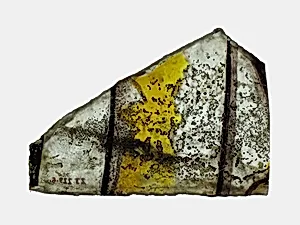
Medium
Colorless glass
Dimensions
Overall: 2 15/16 x 2 3/16 in. (7.5 x 5.5 cm)
Classification
Glass-Stained
Culture
French
Department
Medieval Art
Museum
Metropolitan Museum of Art, New York, NY
Credit
Gift of Dr. Bashford Dean, 1923
Accession Number
23.229.6-4
Rights
Public Domain
Art Historical Context
This delicate glass fragment, hailing from 15th-century France, a tantalizing glimpse into the luminous world of medieval stained glass. Measuring just 2 15/16 x 2 3/16 inches (7.5 x 5.5 cm), this colorless piece—classified as stained glass—likely originated from a grand Gothic cathedral window, where such fragments once formed vibrant narratives in light. Crafted by an unknown artist during the late Middle Ages, it exemplifies the era's masterful glassworking techniques, possibly involving silver stain or enamel painting that has faded over time, allowing natural light to play through its translucent form. In the 1400s, French stained glass reached artistic heights in cathedrals like Chartres and Sainte-Chapelle, serving as "poor man's Bible" to illuminate biblical stories, saints, and royal heraldry for worshippers. Though small and enigmatic, this fragment preserves the technical precision of pot-metal glass production and leaded assembly, highlighting the fusion of artistry and spirituality in medieval Europe. Its survival speaks to the fragility of these treasures, often shattered by wars or time. Generously gifted to the Metropolitan Museum of Art in 1923 by Dr. Bashford Dean, a pioneering collector of medieval artifacts, this piece invites us to ponder the lost grandeur of its original setting—stand close, and imagine sunlight transforming it into a jewel of color and faith.