
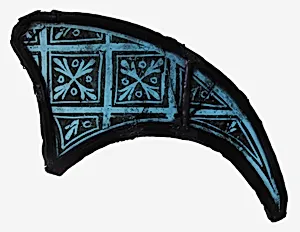
Glass Fragment
Unknown Artist
13th–14th century
Medium
Pot metal glass
Dimensions
Overall: 6 1/4 x 3 1/4 in (15.9 x 8.3 cm)
Classification
Glass-Stained
Culture
European
Department
Medieval Art
Museum
Metropolitan Museum of Art, New York, NY
Credit
Gift of George D. Pratt, 1930
Accession Number
30.73.236
Rights
Public Domain
Art Historical Context
This delicate *Glass Fragment*, dating to the 13th–14th century, offers a glimpse into the luminous world of medieval European stained glass. Crafted pot metal glass—a technique where metal oxides like copper or cobalt were fused directly into molten glass to create vibrant, enduring colors—this small piece (6 1/4 x 3 1/4 in.) once contributed to the grand stained-glass windows of Gothic cathedrals and churches. These windows transformed sunlight into a kaleidoscope of jewel tones, serving as "poor man's Bibles" by illustrating sacred stories for worshippers who couldn't read. In the Medieval Art department of the Metropolitan Museum of Art, gifted by George D. Pratt in 1930, this fragment exemplifies the technical mastery of anonymous artisans. Pot metal glass was prized for its depth and intensity, unlike later methods that layered color. Surviving fragments like this are rare treasures, hinting at the splendor of structures like Chartres or Sainte-Chapelle, where glass rivaled stone in storytelling power. Though its exact scene is lost, it evokes the era's devotion to light as a symbol of the divine, inviting us to ponder the hands that shaped it centuries ago.