
Glass Fragment
Unknown Artist
15th century, with modern additions
Medium
Colorless glass
Dimensions
Overall (with leads): 5 x 11 1/2 in. (12.7 x 29.2 cm)
Classification
Glass-Stained
Culture
European
Department
Medieval Art
Museum
Metropolitan Museum of Art, New York, NY
Credit
Gift of George D. Pratt, 1930
Accession Number
30.73.28
Rights
Public Domain
Art Historical Context
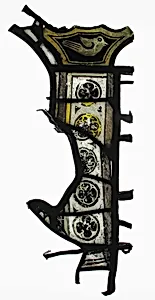
This delicate *Glass Fragment* hails from 15th-century Europe, a golden age for stained glass artistry during the late Medieval period. Crafted from colorless glass—a base material often enlivened with mineral paints, enamels, or flashes of color—this small piece (5 x 11½ inches, including modern stabilizing leads) likely originated from a grand church window. Stained glass was more than decoration; it transformed sunlight into vibrant narratives, illuminating biblical stories, saints, and heraldry for worshippers below. Its survival speaks to the fragility of these luminous treasures, many shattered during wars, reforms, or time's relentless march. Artistically, the fragment showcases the era's masterful techniques: pot-metal glass (colored during melting) or silver stain for golden hues, applied with precision and fired for permanence. Though an unknown artist's hand shaped it, the work embodies Gothic traditions of intricate tracery and jewel-like translucency, evoking divine light in stone cathedrals. Modern additions, such as stabilizing leads, reflect conservation efforts to preserve these relics for future generations. A generous gift from George D. Pratt in 1930, it now graces the Metropolitan Museum of Art's Medieval Art collection, inviting us to ponder the devotion and skill of artisans whose glow still captivates. (198 words)