
Glass Fragments
Unknown Artist
4th century
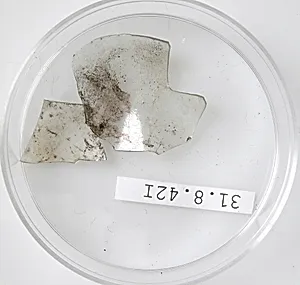
Medium
Glass (clear)
Dimensions
Storage (petri dish diam.): 2 3/16 in. (5.5 cm)
Classification
Glass-Vessels
Culture
Coptic
Department
Medieval Art
Museum
Metropolitan Museum of Art, New York, NY
Credit
Rogers Fund, 1931
Accession Number
31.8.42.40a, b
Rights
Public Domain
Art Historical Context
These delicate *Glass Fragments* from 4th century Coptic Egypt offer a glimpse into the everyday artistry of early Christian communities in the Nile Valley. Preserved in a small petri dish measuring just 2 3/16 inches (5.5 cm) in diameter, these clear glass shards likely originated from a vessel—perhaps a cup, flask, or lamp—crafted using sophisticated blowing and shaping techniques inherited from Roman-Egyptian traditions. through the Rogers Fund in 1931, they now reside in the Metropolitan of Art's Medieval Art department, among glass vessels that highlight Coptic craftsmanship. Coptic culture, flourishing from the 3rd to 12th centuries, blended pharaonic, Greco-Roman, and emerging Christian motifs, with glassmaking as a vital industry. Clear glass like this was prized for its transparency and purity, often used in household items, trade goods, or liturgical objects. These fragments survive as rare archaeological treasures, attesting to the technical prowess of Coptic artisans who molded molten silica into functional beauty amid Egypt's late antique transformation. For museum visitors, these unassuming pieces evoke the vibrancy of a vanished world, reminding us how fragile artifacts illuminate profound cultural shifts—from pagan rituals to Christian devotion—preserved across millennia.