
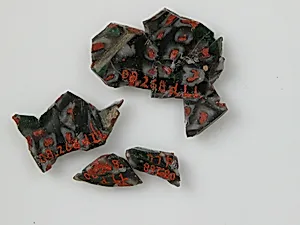
Glass Fragments from a Vessel
Unknown Artist
4th–early 5th century
Medium
Glass
Dimensions
Storage (petri dish diam.): 2 1/8 in. (5.4 cm)
Classification
Glass-Vessels
Culture
Coptic
Department
Medieval Art
Museum
Metropolitan Museum of Art, New York, NY
Credit
Rogers Fund, 1908
Accession Number
08.268.9a–d
Rights
Public Domain
Art Historical Context
These delicate glass fragments, hailing from a vessel crafted in Coptic Egypt during the 4th to 5th century, a glimpse into the vibrant of Late Antique craftsmanship. Preserved in a small petri dish just 2 1/8 inches (5.4 cm) in diameter, they belong to the Metropolitan Museum of Art's Medieval Art, acquired through the Rogers Fund in 8. As remnants of everyday vessels, they highlight the ubiquity of glass in Coptic society, where such objects served practical purposes like holding oils, perfumes, or wine while doubling as status symbols. Coptic culture, emerging in Christian Egypt amid the blend of pharaonic, Greco-Roman, and early Byzantine influences, produced glass renowned for its technical innovation. Artisans employed blowing and molding techniques, often yielding translucent, colorful pieces that reflected the region's active trade networks along the Nile and Mediterranean. Though fragmented, these shards evoke the era's artistic ingenuity—translucent blues, greens, or earth tones typical of the time, symbolizing both utility and spiritual purity in a burgeoning Christian context. For museum visitors, these unassuming pieces underscore how archaeology preserves intimate traces of ancient lives, bridging the gap between antiquity and our modern gaze. A testament to enduring fragility, they invite reflection on Coptic Egypt's role in the dawn of medieval art.