
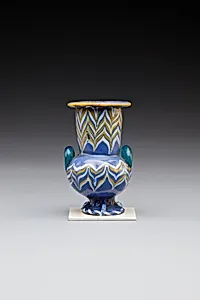
Glass Jar
Unknown Artist
ca. 1353–1323 B.C.
Medium
Glass
Dimensions
H. 5.5 cm (2 3/16 in)
Classification
jar
Period
New Kingdom, Amarna Period
Department
Egyptian Art
Museum
Metropolitan Museum of Art, New York, NY
Credit
Purchase, Edward S. Harkness Gift, 1926
Accession Number
26.7.1181
Rights
Public Domain
Art Historical Context
This delicate glass jar, dating to Amarna Period of Egypt's New Kingdom (ca 1353–1323 B.C.), hails from Dynasty 18—a revolutionary era under Pharaoh Akhenaten. The Amarna Period is famed for its bold artistic experimentation, including elongated figures and a focus on the Aten sun disk, though everyday luxury objects like this jar reflect the era's refined craftsmanship. Standing just 5.5 cm tall, it likely served as a container for precious oils, perfumes, or cosmetics, underscoring the elite status of its owner in a society where such items were rare treasures. Crafted using the innovative core-formed glass technique, the jar was made by winding molten glass threads around a removable clay core on a metal rod, then smoothing and decorating it with additional trails of color. Glassmaking flourished in the 18th Dynasty, with Amarna workshops producing vibrant, translucent vessels that mimicked semiprecious stones like lapis lazuli or turquoise—materials too costly for mass production. This method highlights ancient Egyptian ingenuity, blending artistry with advanced pyrotechnology. Acquired by the Metropolitan Museum of Art through the Edward S. Harkness Gift in 1926, this jar offers a glimpse into the opulent daily life of New Kingdom nobility, where glass symbolized wealth and technological prowess amid profound religious and cultural shifts.