
Glass mosaic fragment
Unknown Artist
late 1st century BCE–early 1st century CE
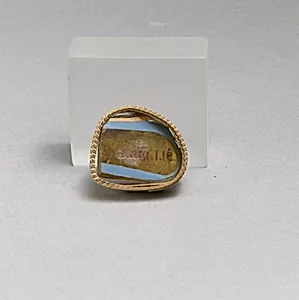
Medium
Glass
Dimensions
Other: 3/4 x 7/8 in. (2 x 2.3 cm)
Classification
Glass
Culture & Period
Roman · Early Imperial
Department
Greek and Roman Art
Museum
Metropolitan Museum of Art, New York, NY
Credit
Edward C. Moore Collection, Bequest of Edward C. Moore, 1891
Accession Number
91.1.1904
Rights
Public Domain
Art Historical Context
This delicate glass mosaic fragment, dating to the late 1st century BCE through early 1st century CE, offers a glimpse into the opulent world of Early Imperial Rome. Measuring just 3/4 x 7/8 inches, it likely formed part of a larger decorative panel, vessel, or architectural inlay, showcasing the Romans' mastery of glass as a luxury medium during the transition from Republic to Empire under Augustus. Roman glass mosaics, known as *verre sectile* or opus sectile in some contexts, were crafted by cutting and arranging tiny, colorful tesserae—small glass pieces—into intricate patterns. This technique produced shimmering, jewel-like effects with vibrant hues that rivaled more precious materials like gemstones, highlighting Rome's innovative glassworking industry centered in places like Alexandria and Italy. Unlike stone mosaics, glass versions allowed for translucency and light play, making them ideal for elite homes, temples, or public spaces. Preserved through the Edward C. Moore Collection and now in the Metropolitan Museum of Art's Greek and Roman Art department, this fragment embodies the technical sophistication and aesthetic refinement of early Roman artistry. It reminds us how everyday materials were transformed into symbols of status and beauty in antiquity.