
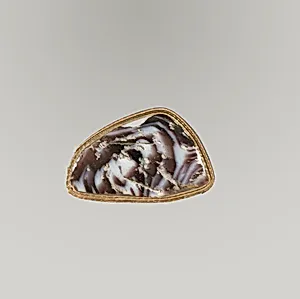
Glass mosaic inlay fragment
Unknown Artist
late 1st century BCE–early 1st century CE
Medium
Glass
Dimensions
Other: 7/8 x 1 3/8 in. (2.2 x 3.5 cm)
Classification
Glass
Culture & Period
Roman · Early Imperial
Department
Greek and Roman Art
Museum
Metropolitan Museum of Art, New York, NY
Credit
Edward C. Moore Collection, Bequest of Edward C. Moore, 1891
Accession Number
91.1.1749
Rights
Public Domain
Art Historical Context
This delicate glass mosaic inlay fragment dating to the late 1st BCE through the early 1st century CE, offers a glimpse into the opulent world of Early Imperial Rome. Crafted during the transition from to Empire—under figures like Augustus—this tiny piece (just 7/8 x 1 3/8 inches) was likely part of a larger decorative ensemble, such as furniture, vessels, or architectural elements adorning elite homes or public spaces. Roman glassworkers excelled in mosaic techniques, slicing rods of colored glass into minuscule tesserae and arranging them to form intricate patterns. This method, building on Hellenistic traditions, highlighted Rome's mastery of glassblowing and cutting, transforming humble material into shimmering luxury. Such inlays symbolized wealth and sophistication, often featuring vibrant hues that mimicked gemstones. Now housed in the Metropolitan Museum of Art's Greek and Roman Art Department, this fragment entered the collection via the Edward C. Moore Bequest in 1891. It reminds us how everyday artifacts reveal the ingenuity of ancient artisans, bridging art and technology in the heart of the Empire.