
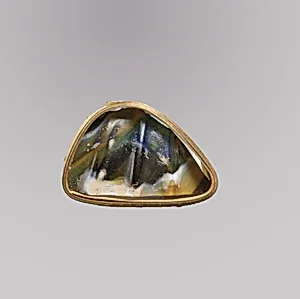
Glass mosaic ribbed bowl fragment
Unknown Artist
late 1st century BCE–early 1st century CE
Medium
Glass
Dimensions
Other: 15/16 x 1 1/2 in. (2.4 x 3.8 cm)
Classification
Glass
Culture & Period
Roman · Early Imperial
Department
Greek and Roman Art
Museum
Metropolitan Museum of Art, New York, NY
Credit
Edward C. Moore Collection, Bequest of Edward C. Moore, 1891
Accession Number
91.1.1718
Rights
Public Domain
Art Historical Context
This delicate fragment from a glass mosaic ribbed bowl offers a glimpse into the opulent world of Early Imperial Rome, dating to the late 1st century BCE to early 1st century CE. Craft in the Roman culture during a time of expanding trade and artistic innovation under the first emperors, this small piece—measuring just 15/16 x 1 1/2 inches (2.4 x 3.8 cm)—hints at the grandeur of complete vessels once used by the elite for dining or display. The artwork showcases the sophisticated mosaic glass technique, where colorful glass canes were fused, sliced, and arranged to create intricate patterns, often mimicking luxurious stone like alabaster or agate. The ribbed design, formed by molding, added both visual texture and structural elegance, making such bowls prized status symbols. Though only a fragment survives, it exemplifies Roman glassworking prowess, blending functionality with artistry in everyday luxury goods. Now part of the Metropolitan Museum of Art's Greek and Roman Art collection, gifted through the Edward C. Moore Collection in 1891, this piece invites us to imagine the vibrant tables of ancient Rome, where innovation in glass met imperial splendor.