
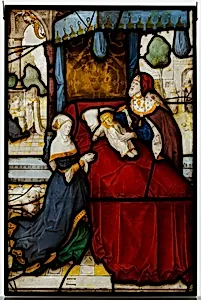
Glass Panel of Elijah and the Widow's Son
early 16th century
Medium
Pot-metal glass and vitreous paint
Dimensions
Overall: 27 3/4 x 15 in. (70.5 x 38.1 cm)
Classification
Glass-Stained
Culture
South Netherlandish
Department
Medieval Art
Museum
Metropolitan Museum of Art, New York, NY
Credit
Gift of Mrs. Lucy Lawrence Hutchinson and Mrs. Gladys Lawrence Hubbard, in memory of their father, Henry C. Lawrence, 1921
Accession Number
21.27.1
Rights
Public Domain
Tags
Art Historical Context
This exquisite stained glass panel, *Glass Panel of Elijah and the Widow's Son*, crafted by South Netherlandish artist Jan van Diependale in the 16th century, a poignant biblical moment from 1 Kings 17. The prophet Elijah revives the widow of Zphath's dying son, a miracle of faith amid famine. Vivid figures—a grieving widow cradling her infant, Elijah in prayer, and even household details like beds and a loyal dog—bring the intimate drama to life, evoking compassion and divine intervention. Created using pot-metal glass—thick sheets colored during firing for jewel-like translucency—and detailed with vitreous paint fired onto the surface, the panel exemplifies the technical mastery of Netherlandish glassmakers. From workshops in Flanders, a hub of stained glass production during the late Gothic to early Renaissance transition, these works were designed for church windows, where sunlight would animate their glowing hues and intricate leads. Housed in the Metropolitan Museum of Art's Medieval Art department (gift of Mrs. Lucy Lawrence Hutchinson and Mrs. Gladys Lawrence Hubbard, 1921), this 27 3/4 x 15-inch treasure highlights the era's blend of spiritual storytelling and artistic innovation, inviting visitors to ponder faith's enduring light.