
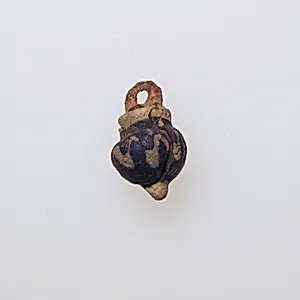
Glass pendant in the form of a jar
Unknown Artist
4th–early 5th century CE
Medium
Glass
Dimensions
Height: 7/8 x 9/16 in. (2.3 x 1.4 cm)
Classification
Glass
Culture & Period
Roman · Late Imperial
Department
Greek and Roman Art
Museum
Metropolitan Museum of Art, New York, NY
Credit
Gift of J. Pierpont Morgan, 1917
Accession Number
17.194.711
Rights
Public Domain
Art Historical Context
This exquisite glass pendant, shaped like a miniature jar, hails from the Late Imperial Roman period (4th–early 5th century CE). Measuring just 7/8 x 9/16 inches (2.3 x 1.4 cm), its diminutive size made it perfect for personal adorn, likely worn as jewelry or a protective amulet around the neck. Crafted in the Roman Empire's Greek and Roman cultural sphere, it exemplifies the everyday elegance of late antiquity, when glass production reached sophisticated heights across the Mediterranean. Roman glassmakers were renowned for their technical prowess, producing translucent vessels and ornaments through molding, blowing, or slumping techniques—methods that allowed for affordable luxury items like this pendant. Its jar-like form echoes common household containers, blending utility with symbolism; such pieces often held perfumes, oils, or spices, reflecting daily life and trade networks from Egypt to Gaul. Today, this delicate artifact resides in the Metropolitan Museum of Art's Department of Greek and Roman Art, a generous gift from J. Pierpont Morgan in 1917. It offers a tangible glimpse into the refined tastes of ordinary Romans during a transformative era, bridging classical antiquity and the early medieval world.