
Glassichord
late 18th–early 19th century
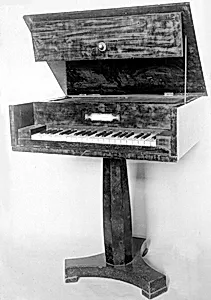
Medium
pine, glass, bone, brass, leather, felt
Dimensions
68cm x 49.5cm x 77.5cm
Classification
Idiophone-Struck-bar-glass
Culture
Austrian?
Department
Musical Instruments
Museum
Metropolitan Museum of Art, New York, NY
Credit
The Crosby Brown Collection of Musical Instruments, 1889
Accession Number
89.4.2854
Rights
Public Domain
Art Historical Context
Step into the late 18th- to early 19th-century world of musical innovation with the *Glassichord*, crafted by Austrian maker F J Lendel. This rare idiophone, classified as a struck-bar glass instrument, belongs to the Metropolitan Museum of Art's renowned Crosby Brown Collection of Musical Instruments, acquired in 1889. Measuring 68 x 49.5 x 77.5 cm, it exemplifies the era's fascination with glass as a sound-producing medium, bridging craftsmanship and acoustics during the Enlightenment's experimental spirit. Constructed from an eclectic array of materials—pine for the body, glass bars for vibration, and accents of bone, brass, leather, and felt—the *Glassichord* highlights meticulous joinery and material synergy. Players struck the tuned glass bars with mallets, producing crystalline tones distinct from bowed or blown instruments. Such designs echoed contemporaries like Benjamin Franklin's glass armonica but favored durable bars over spinning bowls, reflecting advances in precision glassmaking and tonal experimentation. Housed in the Met's Musical Instruments department, this piece offers a window into Austrian musical culture, where luthiers pushed boundaries to create novel timbres for salons and courts. Its survival underscores the collection's role in preserving overlooked gems of sound artistry, inviting visitors to imagine its shimmering resonances echoing through historic halls.