
Glen Douglas
1927
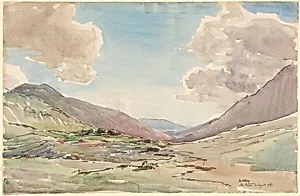
Medium
pen and brown ink and watercolor on laid paper
Dimensions
sight size: 28.2 x 43.5 cm (11 1/8 x 17 1/8 in.) support (sealed mount): 38.1 x 51.2 cm (15 x 20 3/16 in.)
Classification
Drawing
Department
CG-W
Museum
National Gallery of Art, Washington, D.C.
Credit
Rosenwald Collection
Accession Number
1943.3.6114
Rights
Public Domain
Art Historical Context
James McBey’s “Glen Douglas,” dated 1927, is a delicate landscape drawing executed in pen and brown ink with watercolor on laid paper. The combination of precise ink lines and translucent color washes allows the artist to record both the structure and the fleeting atmosphere of the Scottish glen. Measuring just over 11 by 17 inches, the sheet feels intimate, as though it were made during a quiet moment of observation outdoors. The medium itself carries historical weight: pen and watercolor on laid paper was a favored technique for British artists seeking to capture the natural world with both accuracy and spontaneity in the early twentieth century. The textured surface of the paper holds the ink cleanly while letting the watercolor breathe, producing a lively yet restrained effect suited to the muted tones of the Scottish landscape. Now part of the Rosenwald Collection at the National Gallery of Art, the drawing offers visitors a window into McBey’s travels and his enduring interest in place. Its modest scale and refined technique invite close looking, rewarding viewers with the quiet beauty of a single, carefully observed view.
About the Artist
James McBey · 1883–1959
James McBey (1883–1959) was a Scottish artist renowned for his etchings and paintings, emerging from humble beginnings in Newburgh, Aberdeenshire, as the illegitimate son of a blacksmith's daughter. Largely self-taught, he left school at fifteen to work as a bank clerk in Aberdeen, where he devoured art books from the public library and attended evening classes at Gray's School of Art to hone his ...