
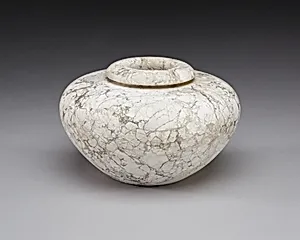
Globular jar
Unknown Artist
ca. 2750–2649 B.C.
Medium
Magnesite
Dimensions
H. 8.1 cm (3 3/16 in.); Diam. 12. cm (4 3/4 in.)
Classification
Jar, globular
Period
Early Dynastic Period
Department
Egyptian Art
Museum
Metropolitan Museum of Art, New York, NY
Credit
Rogers Fund, 1912
Accession Number
12.181.151
Rights
Public Domain
Art Historical Context
This delicate globular jar, crafted from magnesite around 2750–2649 B.C. during Egypt's Early Dynastic Period (Dynasty 2, half), exemplifies the exquisite stoneworking skills of ancient Egyptian artisans. Standing just 8.1 cm tall with a diameter of 12 cm, its smooth, rounded form—wider at the middle and tapering to a narrow neck—suggests it was designed for storing precious oils, perfumes, or, items essential to elite daily life and funerary rituals. In the formative years of pharaonic Egypt, when the first kings consolidated power and monumental architecture like the Step Pyramid emerged, stone vessels like this one were prestige objects. Carved from hard, translucent magnesite (a magnesium carbonate mineral quarried in the Eastern Desert), the jar reflects advanced lapidary techniques: hollowing and polishing solid stone blocks to create functional yet elegant forms. These vessels, often found in royal tombs, symbolized wealth and continuity into the afterlife, bridging the mundane and divine. Acquired through the Rogers Fund in 1912, this jar now graces the Metropolitan Museum of Art's Egyptian Art collection, offering visitors a tangible link to the dawn of one of history's greatest civilizations.