
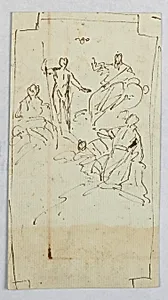
Glory with Trinity and Saints (recto), architectural plan for the church of Santa Maria d'Itria in Rome
ca. 1814–1819
Medium
figures
Classification
figures
Department
Smithsonian Collection
Museum
Smithsonian American Art Museum
Credit
Museum purchase through gift of various donors
Accession Number
1901-39-113
Rights
Public Domain
About this artwork
Research in Progress
Art Historical Context
Francesco Manno (1754–1831), a prominent Italian painter and engraver active in Rome, created this intriguing double-sided drawing around 1814–1819. Titled *Glory with Trinity and Saints* on the recto, it showcases Manno's skill in rendering celestial religious figures, likely in a dynamic Baroque-inspired composition evoking divine glory. The verso reveals a practical architectural plan for the church of Santa Maria d'Itria in Rome, highlighting Manno's versatility as both artist and designer during the Neoclassical era. This work bridges art and architecture, reflecting the era's revival of classical grandeur amid post-Napoleonic reconstruction in Italy. Churches like Santa Maria d'Itria embodied Counter-Reformation piety blended with Enlightenment rationality, and Manno's sketches would have aided in envisioning altarpieces or frescoes integrated into sacred spaces. The medium—focused on figures—suggests preparatory studies, emphasizing fluid lines and dramatic poses typical of Italian draftsmanship. Acquired through museum purchase and housed in the Smithsonian American Art Museum's collection, this piece underscores transatlantic appreciation for European mastery. Ongoing research promises deeper insights, inviting visitors to ponder how such sketches brought heavenly visions to earthly stone. (198 words)