
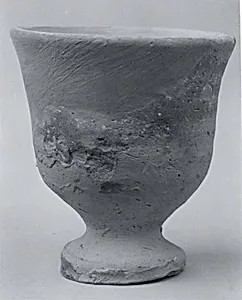
Goblet
Unknown Artist
ca. 8th–7th century BCE
Medium
Ceramic
Dimensions
3.75 in. (9.53 cm)
Classification
Ceramics-Vessels
Culture & Period
Assyrian · Neo-Assyrian
Department
Ancient Near Eastern Art
Museum
Metropolitan Museum of Art, New York, NY
Credit
Rogers Fund, 1954
Accession Number
54.117.43
Rights
Public Domain
Art Historical Context
This delicate ceramic goblet, dating to around the 8th–7th century BCE, offers a glimpse into the Neo-Assyrian period, when the Assyrian Empire reached the peak of its power across the Ancient Near East. Spanning from modern-day Iraq to Syria and beyond, this era was marked by grand palaces, monumental sculptures, and a sophisticated urban culture centered in cities like Nineveh. Though created by an unknown artisan, the goblet exemplifies the everyday craftsmanship that supported imperial life, possibly used for drinking wine or ritual offerings in elite households. Crafted from ceramic, a versatile medium prized for its durability and accessibility, this vessel stands just 3.75 inches (9.53 cm) tall—small enough for intimate use yet finely proportioned. Neo-Assyrian potters mastered wheel-throwing techniques, producing functional forms like this oinochoe-style goblet with elegant simplicity. Its survival speaks to the resilience of ancient ceramics, which often outlasted perishable materials in archaeological digs. Acquired through the Rogers Fund in 1954 and housed in the Metropolitan Museum of Art's Department of Ancient Near Eastern Art, this piece invites us to ponder the human stories behind Assyria's might: a toast to forgotten feasts in a world of conquerors and scribes.