
Goblet
Unknown Artist
ca. 1800
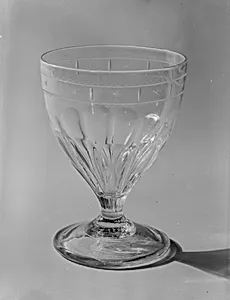
Medium
Blown lead glass
Dimensions
H. 4 3/4 in. (12.1 cm)
Classification
Goblet
Culture
British or Irish
Department
The American Wing
Museum
Metropolitan Museum of Art, New York, NY
Credit
Bequest of Helen Hay Whitney, 1944
Accession Number
45.35.26
Rights
Public Domain
Art Historical Context
This elegant goblet, crafted around 1800 by an unknown British or Irish artist, exemplifies the refined glassmaking traditions of the late Georgian era. Standing at a modest 4 3/4 inches tall, it was fashioned from blown lead glass—a technique where molten glass is blown into a mold or free-form shape, then infused with lead oxide for exceptional clarity and sparkle. This innovation, pioneered in England in the late 17th century, made lead crystal a staple of genteel dining, rivaling fine china in prestige. Lead glass goblets like this one were essential tableware for the emerging middle and upper classes, reflecting the era's growing appreciation for domestic luxury amid Britain's industrial boom and expanding trade networks. Its British or Irish origins evoke renowned centers like Waterford or Bristol, where artisans perfected the art of creating lightweight yet durable vessels for wine, ale, or punch. Though unadorned in the records, such pieces often featured subtle facets or engravings that caught the light, symbolizing hospitality and sophistication. Today, this goblet graces The Metropolitan Museum of Art's American Wing, thanks to the 1944 bequest of Helen Hay Whitney. It bridges European craftsmanship with American collecting tastes, reminding us how everyday objects carried cultural prestige across the Atlantic. A testament to anonymous skill, it invites us to toast the unsung heroes of 19th-century design.