
Goblet
Unknown Artist
1850–60
Medium
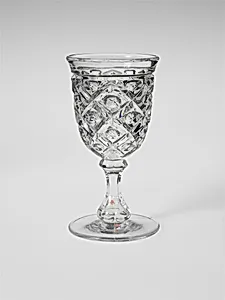
Pressed glass, diamond thumbprint
Dimensions
Dimensions unavailable
Classification
Goblet
Culture
American
Department
The American Wing
Museum
Metropolitan Museum of Art, New York, NY
Credit
Gift of Mrs. Emily Winthrop Miles, 1946
Accession Number
46.140.64
Rights
Public Domain
Art Historical Context
This elegant goblet, crafted in pressed glass with a distinctive diamond thumbprint pattern, hails from mid-19th-century America (1850–60). The "diamond thumbprint" refers to its textured surface of diamond-shaped facets interspersed with rounded, thumbprint-like indentations, creating a sparkling, tactile appeal that catches the light beautifully. Pressed glass, a revolutionary technique of the era, involved forcing molten glass into ornate metal molds under high pressure, enabling mass production of affordable yet sophisticated tableware. Produced during the Victorian period's peak of industrial innovation, this goblet exemplifies the democratization of luxury in American homes. New England glasshouses like those in Sandwich, Massachusetts, popularized such patterns, blending functionality with decorative flair to suit the rising middle class's tastes. Goblets like this were everyday essentials for formal dining, symbolizing prosperity and refinement amid America's expanding manufacturing prowess. Now housed in The Metropolitan Museum of Art's American Wing, the piece was generously gifted by Mrs. Emily Winthrop Miles in 1946. It offers a tangible glimpse into 19th-century domestic life, highlighting how everyday objects became canvases for artistic expression in early industrial America.