
Goblet and Cover (?)
Unknown Artist
700s
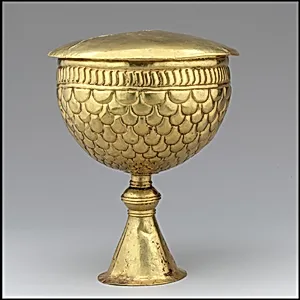
Medium
Gold
Dimensions
a only: 6 5/8 × 4 3/4 in., 13.439 Troy Ounces (16.8 × 12.1 cm, 418g) b only: 1.993 Troy Ounces (62g)
Classification
Metalwork-Gold
Culture
Avar or Byzantine
Department
Medieval Art
Museum
Metropolitan Museum of Art, New York, NY
Credit
Gift of J. Pierpont Morgan, 1917
Accession Number
17.190.1711a, b
Rights
Public Domain
Art Historical Context
This exquisite gold goblet and cover dating to the 700s, hails from Avar or Byzantine culture, reflecting the opulent metalworking traditions of early medieval Eastern Europe and the Byzantine Empire. Standing about 6⅝ inches tall with its cover, the vessel weighs a substantial 13.4 Troy ounces for the gob alone, underscoring its creation as a luxury item likely reserved for elite ceremonies royal banquets. Housed in the Metropolitan Museum of Art's Art department, it was generously gifted by J. Pierpont Morgan in 7. Crafted from pure gold, this artifact exemplifies the advanced goldsmithing techniques of the era, where skilled artisans hammered, chased, and possibly engraved precious metal to produce durable, radiant objects symbolizing power and wealth. The Avars, nomadic horsemen who dominated the Carpathian Basin, often blended their steppe traditions with Byzantine influences, creating hybrid treasures like this one. Its uncertain identification as a "goblet and cover" invites visitors to ponder its ritual use—perhaps for wine in diplomatic feasts or sacred rites. As a rare survivor from the turbulent 8th century, this piece offers a glimpse into the cultural exchanges between nomadic warriors and the sophisticated Byzantine world, reminding us how gold not only endured but illuminated history.