
Goblet and saucer
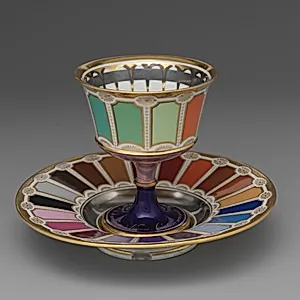
Medium
Hard-paste porcelain
Dimensions
Height (goblet .291): 4 3/8 in. (11.1 cm); Diameter (saucer .290): 7 1/8 in. (18.1 cm)
Classification
Ceramics-Porcelain
Culture
Austrian, Vienna
Department
European Sculpture and Decorative Arts
Museum
Metropolitan Museum of Art, New York, NY
Credit
Gift of Henry G. Marquand, 1894
Accession Number
94.4.290, .291
Rights
Public Domain
Art Historical Context
Nestled in the Metropolitan Museum of Art's European Sculpture and Decorative Arts, this delicate goblet and saucer, crafted in 1804 by the Imperial Porcelain Manuf in Vienna, exemplifies the of Austrian porcelain artistry. Standing at 4 3/8 inches tallgoblet) with a saucer spanning 7 1/8 inches in diameter, pair was fashioned from hard-paste porcelain technically advanced medium developed in Europe to mimic the prized translucency and strength of Chinese export wares. This durable material, fired at high temperatures from kaolin clay, allowed for intricate forms and fine details that elevated everyday tableware to objects of refined beauty. Produced during the Napoleonic era under Habsburg patronage, the Imperial Manufactory in Vienna was a symbol of imperial luxury and technical innovation, supplying porcelain to royalty and nobility. Hard-paste porcelain's significance lay in its resilience and elegance, making it ideal for goblets and saucers used in sophisticated coffee or chocolate services—a growing social ritual in early 19th-century Europe. Gifted to the Met in 1894 by Henry G. Marquand, this set offers a glimpse into the opulent domestic life of the period, where ceramics bridged functionality and high art. (198 words)
About the Artist
Imperial Porcelain Manufactory ( ) · 1744 –1864
Vienna, 1744–1864