
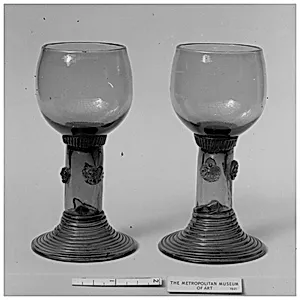
Goblet (Roemer)
Unknown Artist
18th–19th century
Medium
Glass
Dimensions
Height: 5 in. (12.7 cm)
Classification
Glass
Culture
German
Department
European Sculpture and Decorative Arts
Museum
Metropolitan Museum of Art, New York, NY
Credit
Gift of Mrs. Amelia B. Lazarus, in the name of Miss Emilie Lazarus, 1895
Accession Number
95.6.25
Rights
Public Domain
Art Historical Context
This elegant Goblet, known as a *Roemer*, hails from Germany during the 18th–19th century, a period when glassmaking flourished in the Rhineland region Standing at just 5 inches (12.7 cm) tall, delicate piece exemplifies the artistry of European decorative glass, blending functionality with subtle luxury. Roemers were favored drinking vessels for wine or beer, prized for their sturdy yet refined form—typically featuring a broad, tulip-shaped bowl, aopped stem adorned with raspberry prunts (applied glass pads for grip), and a wide foot. Crafted by an unknown artisan, the goblet's clear glass highlights the technical prowess of traditional German glassblowing techniques, where molten glass was skillfully shaped and annealed for clarity and durability. These vessels were not just utilitarian; they symbolized conviviality in bourgeois homes and taverns, reflecting the era's appreciation for everyday elegance amid growing industrialization. Now housed in the Metropolitan Museum of Art's Department of European Sculpture and Decorative Arts, this Roemer was a generous gift from Mrs. Amelia B. Lazarus in the name of Miss Emilie Lazarus in 1895. It invites visitors to toast to centuries of craftsmanship and cultural tradition.