
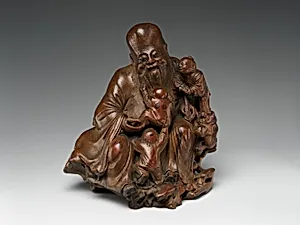
清 竹雕童子壽老|God of Longevity (Shoulao) with children
Unknown Artist
18th century
Medium
Bamboo
Dimensions
H. 6 1/4 in. (15.9 cm); W. 5 3/4 in. (14.6 cm); D. 5 in. (12.7 cm)
Classification
Sculpture
Culture & Period
China · Qing dynasty (1644–1911)
Department
Asian Art
Museum
Metropolitan Museum of Art, New York, NY
Credit
Gift of Ellen Barker, 1942
Accession Number
42.90.71
Rights
Public Domain
Tags
Art Historical Context
This exquisite bamboo carving from 18th-century Qing dynasty (1644–1911) depicts Shoulao, the beloved God of Longevity, joyfully surrounded by children. Standing just over 6 inches tall (H. 6 1/4 in.), the sculpture captures the deity—an elderly figure symbolizing eternal life and prosperity—in a tender, playful moment with infants, evoking wishes for health and family blessings. Bamboo carving flourished during the Qing period as an accessible yet sophisticated art form, prized for eco-friendly medium and potential for intricate detail. Artisans skillfully exploited the bamboo's natural grain and hollow structure, using fine knives to render lifelike expressions, flowing robes, and dynamic poses on a single rhizome. Unlike rarer materials like jade or ivory, bamboo made such auspicious talismans affordable for homes, altars, and scholarly studios, reflecting China's deep cultural reverence for longevity amid the dynasty's artistic refinement. A gift to the Metropolitan Museum of Art in 1942, this piece highlights the Qing era's blend of folk devotion and technical virtuosity, inviting visitors to appreciate its whimsical charm and timeless symbolism.