
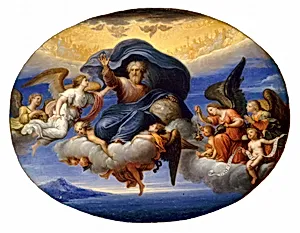
God the Father
after 1664
Medium
oil on canvas
Dimensions
overall (oval): 46.5 x 60.3 cm (18 5/16 x 23 3/4 in.) framed: 61.9 x 75.9 x 6.4 cm (24 3/8 x 29 7/8 x 2 1/2 in.)
Classification
Painting
Department
CF
Museum
National Gallery of Art, Washington, D.C.
Credit
Pepita Milmore Memorial Fund
Accession Number
1986.62.1
Rights
Public Domain
Art Historical Context
Behold *God the Father*, a oil on canvas painting from the circle of Pierre Mignard, created after 1664. Attributed to the workshop or close followers of this prominent French Baroque artist, it reflects the grandeur of 17th-century religious art under Louis XIV's reign. Mignard, a master of history painting and portraiture, trained in Lyon and Rome, where he absorbed the dramatic style of Caravaggio and his followers before becoming a favored court painter in Paris. Works from his circle often captured divine subjects with theatrical light and rich symbolism, evoking awe in viewers amid the Catholic Counter-Reformation's emphasis on spiritual fervor. The oval format—measuring 46.5 x 60.3 cm—adds an intimate, devotional quality, common in Baroque altarpieces or private commissions. Oil on canvas allowed for luminous glazing techniques, building depth and vibrancy in depictions of celestial figures like God the Father, surrounded perhaps by clouds and divine radiance. This medium's versatility suited the era's opulent patronage, blending Italian influences with French elegance. Acquired through the Pepita Milmore Memorial Fund for the National Gallery of Art's collection, this piece invites reflection on faith and artistry. Imagine it gracing a noble salon, reminding 17th-century audiences of divine authority in an age of absolutist monarchy. A testament to Mignard's enduring legacy, it bridges personal piety and royal splendor.