
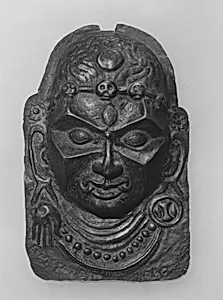
Goddess Chamunda
Unknown Artist
probably 15th–16th century
Medium
Repoussé copper alloy
Dimensions
H. 7 15/16 in. (20.1 cm); W. 4 15/16 in. (12.5 cm)
Classification
Metalwork
Culture
Nepal
Department
Asian Art
Museum
Metropolitan Museum of Art, New York, NY
Credit
Gift of Marie-Hélène and Guy Weill, 1986
Accession Number
1986.511.5
Rights
Public Domain
Tags
Art Historical Context
Nestled in the Metropolitan Museum of Art's Art collection, *Goddess Chamunda is a striking repoussé copper alloy sculpture Nepal, likely crafted in the 15th or 16th century. just under 8 inches tall, this metalwork masterpiece exemplifies the repoussé technique, where hammered the reverse side of the sheet metal to raise intricate forms, creating a dynamic relief that captures the goddess's formidable presence. Gifted by Marie-Hélène and Guy Weill in 1986, it reflects Nepal's rich tradition of Hindu devotional art. Chamunda, a fierce manifestation of the Divine Mother in Hinduism, embodies transformative power, often invoked in tantric rituals for protection and destruction of evil. In Nepalese Hindu iconography, such portable sculptures were revered in both temple worship and personal shrines, highlighting the culture's blend of devotion and artistry during the medieval period. The unknown artist's mastery of copper alloy—durable yet malleable—allowed for detailed expression of divine ferocity. This piece invites visitors to ponder the goddess's role in balancing creation and annihilation, a core Hindu theme. Its compact size suggests it was designed for intimate veneration, bridging the spiritual and everyday in Nepal's vibrant religious landscape.