
Goddess Kamalatmika
ca. 1880–85
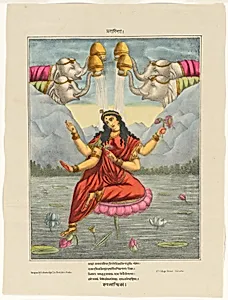
Medium
Lithograph, printed in black with hand-coloring in watercolor and selectively applied glaze
Dimensions
Sheet: 16 x 12 in. (40.7 x 30.5 cm)
Classification
Prints
Culture
West Bengal, Calcutta
Department
Asian Art
Museum
Metropolitan Museum of Art, New York, NY
Credit
Purchase, The Kipper Family Foundation Gift, 2021
Accession Number
2021.194
Rights
Public Domain
Art Historical Context
This lithograph from around 1880–85 captures the divine presence Goddess Kamalatmika through innovative printmaking techniques of The Hindu Art Studio in Calcutta. Created during a period when Bengal was a hub of artistic experimentation under British colonial influence, the work combines the precision of lithography with delicate hand-applied watercolor and glaze. This hybrid approach allowed studios to produce vibrant devotional images at scale while preserving the warmth and individuality of traditional painting. The medium reflects broader cultural shifts in late-19th-century West Bengal, where local artists adapted Western printing methods to meet growing demand for accessible religious art among the urban middle class. Measuring just 16 by 12 inches, the sheet would have been affordable for household worship, bridging elite temple traditions with everyday devotion. Its selective glazing highlights luminous details, giving the goddess an ethereal quality that enhanced its spiritual resonance for viewers. Today, this print offers insight into how Indian artists navigated modernization while honoring sacred iconography, making it a compelling example of cultural adaptation in South Asian art history.