
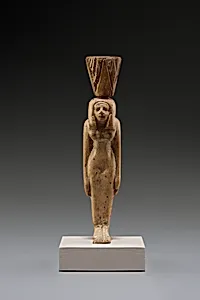
Goddess of Upper Egypt
Unknown Artist
ca. 1550–1295 B.C.
Medium
Ivory
Dimensions
H. 10.8 × W. 2.1 × D. 1.8 cm (4 1/4 × 13/16 × 11/16 in.)
Classification
Statuette, standing goddess, Upper Egypt
Period
New Kingdom
Department
Egyptian Art
Museum
Metropolitan Museum of Art, New York, NY
Credit
Gift of Edward S. Harkness, 1922
Accession Number
22.9.4
Rights
Public Domain
Tags
Art Historical Context
Behold the exquisite *Goddess of Upper Egypt*, a diminutive ivory carving from Egypt's New Kingdom, Dynasty 18 (ca. 1550–1295 B.C.). Standing just 4¼ inches tall, this unknown artist's masterful sculpture captures the divine essence of a goddess associated with Upper Egypt—the southern realm symbolized by the white crown. Crafted during a golden age of pharaonic power, when rulers like Hatshepsut and Tutankhamun reigned, it likely served as a votive offering or protective amulet, embodying spiritual protection and regional pride. Ivory, a rare and luxurious material sourced from elephant tusks or hippopotamus teeth, was reserved for elite religious artifacts, highlighting the object's sacred status. The artist's skill shines in the fine detailing—smooth contours, incised features, and a poised stance that conveys ethereal grace despite the miniature scale (10.8 × 2.1 × 1.8 cm). Such figures bridged the mortal and divine, invoking the goddess's blessings for fertility, protection, or prosperity in daily rituals. Now gracing the Metropolitan Museum of Art thanks to a 1922 gift from Edward S. Harkness, this treasure offers a intimate glimpse into New Kingdom devotion, where art fused piety, craftsmanship, and cultural identity.