
Gold Cross Pendant
Unknown Artist
500–700
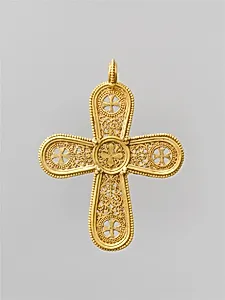
Medium
Gold
Dimensions
Overall: 3 9/16 x 2 11/16 x 1/2in. (9 x 6.8 x 1.2cm)
Classification
Metalwork-Gold
Culture
Byzantine
Department
Medieval Art
Museum
Metropolitan Museum of Art, New York, NY
Credit
Gift of John C. Weber, 2006
Accession Number
2006.569
Rights
Public Domain
Art Historical Context
This exquisite Gold Cross Pendant, crafted by an unknown Byzantine artisan between 500 and 700 CE, exemplifies the early medieval fusion of faith, artistry, and luxury. Measuring just 3 9/16 x 2 11/16 x 1/2 inches, its delicate gold form was likely worn as personal jewelry, hanging from a chain close to the heart. Housed in the Metropolitan Museum Art's Medieval Art Department a gift from John C Weber in 2006, it reflects the Byzantine Empire's golden age, when Constantinople bridged Roman grandeur and Christian devotion. In Byzantine culture, crosses like this were potent symbols of protection and piety amid a world of imperial power and spiritual fervor. Gold, revered for its divine glow and durability, signified wealth and eternal life, often reserved for ecclesiastical or elite adornments. Goldsmiths employed sophisticated techniques—such as hammering thin sheets, repoussé relief, and granulation—to create shimmering surfaces that caught the light, evoking heavenly radiance. Though small, this pendant whispers of daily devotion in a vast empire, reminding us how intimate objects carried profound cultural weight. A testament to Byzantine metalwork mastery, it invites visitors to ponder the wearer's world of emperors, icons, and unyielding faith.